
Governance & nation building
Governance & Nation Building in Indigenous Communities Culturally legitimate. Accountable to your members.
Our governance and nation building directors can work with you to strengthen the way your community and its organizations operate.
Five principles of good governance
Legitimacy and voice, direction, performance, accountability and fairness.
Embed cultural values
Tips to help your community-based organization become culturally legitimate and accountable to its diverse members.
Learn from others
Watch talks on jurisdiction and Indigenous governance, and explore tools for your community.
Where governance begins
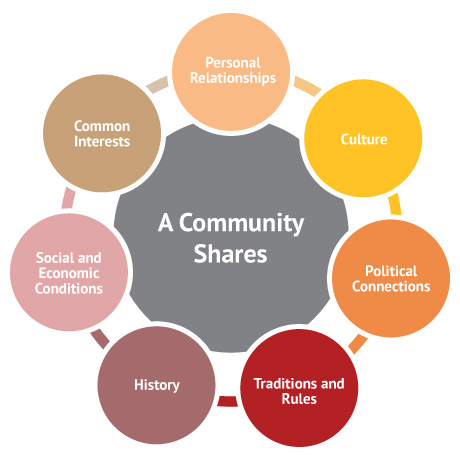
What a community shares
Good governance starts with what already connects your people: personal relationships, culture, political connections, traditions and rules, history, social and economic conditions, and common interests.
Institute on Governance
Five principles of good governance
1. Legitimacy and Voice
Participation – All men and women should have a voice in decision-making, either directly or through legitimate intermediate institutions that represent their intention. Such broad participation is built on freedom of association and speech, as well as capacities to participate constructively.
Consensus orientation – Good governance mediates differing interests to reach a broad consensus on what is in the best interest of the group and, where possible, on policies and procedures.
2. Direction
Strategic vision – Leaders and the public have a broad and long-term perspective on good governance and human development, along with a sense of what is needed for such development. There is also an understanding of the historical, cultural and social complexities in which that perspective is grounded.
3. Performance
Responsiveness – Institutions and processes try to serve all stakeholders.
Effectiveness and efficiency – Processes and institutions produce results that meet needs while making the best use of resources.
4. Accountability
Accountability – Decision-makers in government, the private sector and civil society organizations are accountable to the public, as well as to institutional stakeholders. This accountability differs depending on the organizations and whether the decision is internal or external.
Transparency – Transparency is built on the free flow of information. Processes, institutions and information are directly accessible to those concerned with them, and enough information is provided to understand and monitor them.
5. Fairness
Equity – All men and women have opportunities to improve or maintain their wellbeing.
Rule of Law – Legal frameworks should be fair and enforced impartially, particularly the laws on human rights.
Ready to strengthen your governance?
Let’s talk about what these principles mean for your community.
The Institute on Governance (IOG) Good Governance Principles and the UNDP principles and text on which they are based.
Cultural values
Tips on how to embed cultural values in your governance
If you want your community-based organisation to be culturally legitimate and accountable to its diverse members, you need to:
Know your community
- clarify exactly what kind of governance you want to have and what role you want cultural values to have in your organisation
- know the different cultural groups of your members and the wider community, as well as their interconnections and their different rights and interests
- consult with the leaders and members of these groups so that you understand their concerns and priorities
- be open, fair and honest in dealings and decisions with leaders and their groups
- respect different land ownership rights and interests
- understand the governance history of the community and how that has shaped its current relationships, governance arrangements and problems
- discuss with community members and leaders which cultural values, rules, relationships and processes might specifically strengthen the way your organisation operates
Put it into practice
- be clear about which cultural values, rules, relationships and processes will be part of your organisation’s governance, and which ones are not appropriate or might undermine it
- be clear about how cultural rules and values will be implemented within your organisation—for example, you may want to focus on the way leaders are chosen, how decisions are made, what behaviour is expected of board and staff members, the conditions of work and how you feed information back to members
- tell community members and leaders where the organisation is heading, what the strategic plan is for getting there, and what resources will be used along the way
- report back to members on your progress and problems
- manage your resources wisely and effectively
- deliver the services and outcomes that you’ve promised to your members and the wider community.
From Indigenous governance, Australian Indigenous Governance Institute (AIGI) toolkit.
Learn from others
Talks on governance and jurisdiction
Dean Bear: Jurisdiction
LABRC
IOG Gov Talks: Phase 1 of the First Nations Governance Report
Institute on Governance
2018 Indigenous Governance Symposium
Johnson Shoyama Graduate School of Public Policy
Resources
Tools for your community
Economic growth without investment in human development is unsustainable – and unethical.
— Amartya Sen
Let’s get started
Would you like one of our professional governance and nation building directors to work with you?
We’d love to hear from you. Book a free 30-minute call, or contact us and we’ll get back to you within one business day.